Bible Morning Routine for Grief: Gentle Scripture Practices
Building a Scripture-shaped Morning Routine When Grief Makes Hope Feel Impossible
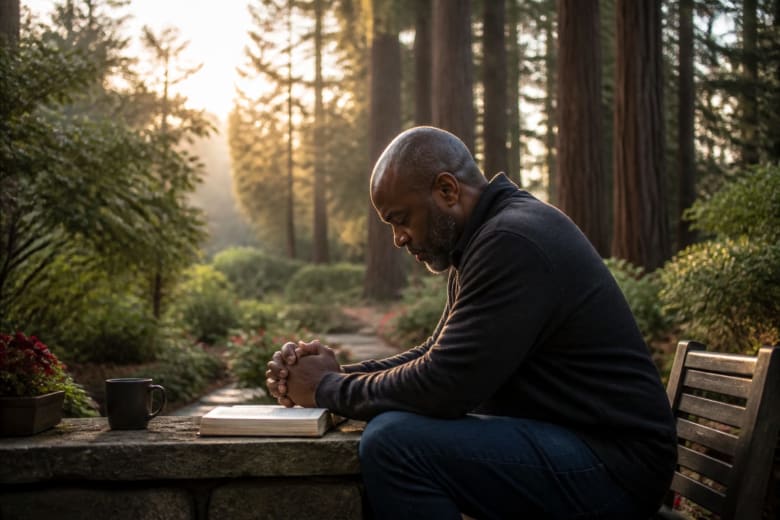
When grief greets you before your feet touch the floor, even the thought of a routine can feel like too much. A bible morning routine for grief is not a demand to feel hopeful on command. It is a gentle way to bring your honest heart before God, receive a little truth for this day, and remember you do not have to carry sorrow alone. In our Rooted in Christ Podcast conversation with Holly Sweat Raper, she shared how prayer and gratitude became part of her mornings while her husband was gravely ill. Her testimony does not offer a formula for grief. It points us toward a faithful next step when the whole road is hard to see.
If you are grieving a spouse, family member, friend, or a future that did not unfold as you hoped, start small. You do not have to manufacture a bright outlook. You can begin with a breath, a sentence of prayer, or one verse of Scripture. God meets us in the real morning, not the one we think we are supposed to have.
Why grief can make mornings feel so heavy
Grief has a way of making the day feel different before anything has even happened. You wake up and remember who is missing. Or the quiet of the room brings back a night spent worrying, caregiving, or trying to make sense of what changed. A morning routine that once felt simple may now seem impossible.
Holly described waking beside her husband as he suffered from advanced cancer. She prayed through the night, unsure what the morning would bring. When she woke, she thanked God for the breath in her lungs, for the time they still had, and for the promise of salvation whatever the outcome. I was struck by the honesty in that testimony. Gratitude did not erase the pain or make the illness good. It helped her turn her attention toward God in the middle of pain.
That distinction matters. If you are grieving, you may hear advice to “stay positive” and feel as if your sadness is a spiritual failure. Scripture gives us room to lament. The Psalms are full of prayers that ask how long, cry out for help, and still turn toward the Lord. Psalm 34:18 says, “The Lord is close to the brokenhearted” (NIV). He is not waiting for you to tidy up your emotions before you come near.
A bible morning routine for grief can be very simple. It can give your thoughts a place to land and help you meet the day with God, even if sorrow is still there. Think of it as a small rhythm of returning, not a measure of how well you are coping.
A bible morning routine for grief shaped by Scripture
When grief is fresh or comes in waves, a long devotional plan may not be realistic. Begin with a few minutes and make room for the day you are actually having. The goal is not to complete a checklist before breakfast. The goal is to bring your attention, your questions, and your need for help to the Lord.
Begin by noticing that you are here
Before reaching for the phone or turning on the news, pause. Take a slow breath and say something honest: “Lord, I woke up hurting. Please stay close to me today.” If words are difficult, sit quietly. You are not earning God’s attention with a polished prayer. You are turning toward the Father who already knows your heart.
Read a small portion of Scripture
Choose a Psalm or a short passage and read it slowly. You might begin with Psalm 23, Psalm 34, Lamentations 3:22-24, or John 11, where Jesus weeps with those mourning Lazarus. You can read a few verses, not a chapter. Notice one phrase that offers comfort or names what you are feeling. In this season, a bible morning routine for grief might mean staying with a single verse for several days.
If you want a practical pattern for reading and responding to the Bible, see our guide to a Christ-centered Scripture practice. Keep it gentle. Scripture is not a tool to silence sorrow. It tells us who God is and gives us words to bring our whole selves to him.
Pray one specific request for today
Ask for what you need in the next few hours. Strength for a difficult appointment. Help getting out of bed. Patience with your children. Courage to make a phone call. You do not have to solve your whole future in one prayer. Jesus teaches us to ask for daily bread, and that is a kind of prayer a grieving heart can understand.
Small practices for mornings when you have little strength
Some mornings you may be ready to read and pray. Other mornings, grief may feel like a weight on your chest. It helps to have a few gentle options, so the routine can bend without breaking.
- Keep a Bible or printed verse beside your bed. Read one line before you stand up.
- Say the name of the person you miss in prayer, then tell God what you wish you could say to them.
- Write one honest sentence in a notebook: “Today I feel...” or “Lord, help me with...”
- Listen to a Psalm or a trusted Christian message if reading feels difficult. Let the words reach you without requiring you to take notes.
- Step outside for a few minutes, if you can, and pray as you notice the light, air, or sounds around you.
- Ask someone you trust to check in with you. A short text can remind you that you are not walking alone.
These practices are not a test. Leave one out when it does not serve you. The bible morning routine for grief is allowed to change as your needs change. Some days, your prayer might be a whispered “help.” That counts as turning to God.
It can also help to be careful about what fills the first part of your day. Holly spoke about feeding our spirits, not only our bodies, and asking what we are listening to. If news or social media leaves you more anxious, consider setting a boundary around it until after prayer or Scripture. Our article on Christian social media boundaries for daily discipleship offers ideas for protecting a little space to attend to God.
How gratitude can make room for grief
Gratitude can be a gift in grief, but it should never become another way to judge yourself. You may not feel thankful for the loss. You do not have to. Holly’s morning prayers included thanks for the breath in her lungs, the moments she still had with her husband, and the hope of eternal life. She was not pretending that cancer was easy. She was naming signs of God’s care while she stood in the middle of an unbearable season.
You might try asking, “What is one small mercy I can notice today?” Maybe someone brought a meal. Maybe you had a few minutes of rest. Maybe you cannot name anything yet, and your prayer is simply, “Lord, help me see your care.” Be patient with yourself. Gratitude can sit beside tears. The two do not cancel each other out.
In the podcast conversation, Holly also talked about bringing fearful thoughts back to what God says. That is not the same as scolding yourself for having fear. It is a way of answering fear with truth. If your mind says, “I am completely alone,” you can remember Jesus’ promise, “I am with you always” (Matthew 28:20, NIV). You may still feel lonely. Keep bringing that feeling to God and, when you can, to a trusted person in your church.
When a morning routine is not enough
A Scripture-shaped rhythm can support you, but it is not meant to carry the full weight of grief by itself. Let a pastor, a mature Christian friend, a grief group, or a qualified counselor walk with you. If sleep, daily responsibilities, or your sense of safety are becoming difficult to manage, reaching out for professional help is a wise and courageous step. God often cares for us through the people who listen, sit with us, and help us find support.
Church community matters here. You do not need to have an inspiring testimony ready before you ask for help. You can say, “Mornings are especially hard. Could you pray with me this week?” A friend can read Scripture aloud, bring breakfast, or simply stay on the phone while you get moving. These are ordinary acts of care, and they reflect the way Christ’s people bear one another’s burdens.
If grief brings questions about God, you are allowed to voice them. Honest questions do not place you outside the reach of Jesus. You might find encouragement in our reflection on making room for honest doubt and biblical faith. Bring your questions into the light with someone who will listen carefully and point you back to Scripture with gentleness.
Keep returning to God, one morning at a time
A bible morning routine for grief is not a promise that every morning will feel lighter. It is a way of saying, “God, here I am again,” and trusting that he receives you. Some days you will read, pray, and feel steady. Other days you may only manage one breath and one sentence. Keep the door open. The Lord is near to the brokenhearted, and his faithfulness does not depend on how much energy you have today.
So start small tomorrow. Put one verse where you can see it. Ask God for help with the next part of the day. Let someone know how you are doing. As Holly reminded us in our conversation, the story is still being written, even when you cannot see what comes next. Our hope is not that grief disappears on schedule. Our hope is Jesus, who meets us in sorrow and holds us in life and in death.
For more of Holly Sweat Raper’s testimony, including how she faced pain, loss, and questions of purpose, listen to the full Rooted in Christ Podcast episode with Holly Sweat Raper. I believe her story will encourage you to seek God honestly in the storm and to take the next faithful step, however small it may be.
Frequently asked questions
What should I include in a Bible morning routine when I am grieving?
Keep it simple: pause, offer an honest prayer, read a short passage of Scripture, and ask God for help with one part of the day. Add support from a trusted person when you need it.
Is it wrong if I do not feel grateful while grieving?
No. Grief and gratitude can exist together, but gratitude is not a requirement or a way to deny pain. If you cannot name something you are thankful for, tell God exactly that and let your prayer be honest.
Which Bible passages can comfort someone who has lost a loved one?
Many grieving people find comfort in Psalm 23, Psalm 34, Lamentations 3:22-24, John 11, and Romans 8:38-39. Read at a pace that feels manageable and consider asking a pastor or friend to read with you.
What if I cannot focus enough to read the Bible in the morning?
Listen to an audio Bible, read one verse, or ask someone to share a passage with you. A brief prayer or quiet moment with God can be a meaningful beginning too.