Repentance Through Prayer and Fellowship for Freedom
Repentance Means Replacing Modern Idols with Prayer and Fellowship
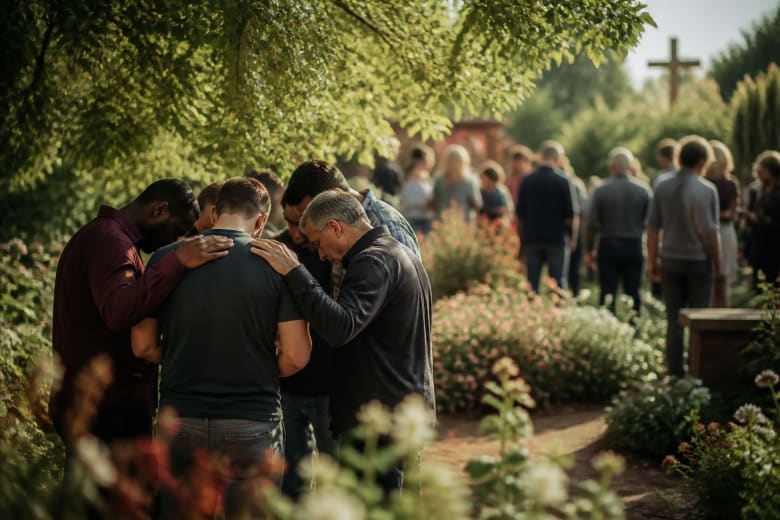
Repentance through prayer and fellowship begins when we recognize that something besides God has taken too much of our trust, attention, or affection. In a recent episode of the Rooted in Christ Podcast, I talked with Jake Doberenz about modern idols and the ways they promise control and certainty. If you have noticed money, approval, comfort, work, or even ministry crowding out your life with God, this article will help you name what is happening and build life-giving rhythms in its place. There is hope here. Christ calls us back to Himself, and He gives us people to walk with as we respond.
What modern idols promise us
When we hear the word idol, we may picture a statue from the Old Testament. But an idol can also be something good that has taken a place in our hearts that belongs to God. Money can provide for a family, work can serve our neighbors, and ministry can help people know Jesus. The question is what we are asking these things to do for us.
In our conversation, Jake described the appeal of idols this way: they offer a sense of certainty and control. A growing bank balance may feel like protection from every possible trouble. A position, relationship, or public reputation may seem to tell us that we are safe and valued. Even ministry can become a substitute for knowing the Lord. We may keep doing work for God while neglecting time with God.
I know how easily we can miss what is happening in our own hearts. We are close to the source, so sometimes we explain away the very patterns that need our attention. In the episode, Jake shared a childhood story about insisting he could stop watching television whenever he wanted, while choosing it over homework and other responsibilities. The story is funny, but most of us recognize the instinct: “I could stop. I just don’t want to.”
Repentance through prayer and fellowship asks us to bring that instinct into the light. We can ask the Lord to search our hearts, then invite trustworthy believers to help us see what we might be rationalizing. Psalm 139:23-24 gives us a simple prayer: “Search me, God, and know my heart” (NIV). We are not asking God to shame us. We are asking Him to reveal what needs His healing and leadership.
How to recognize when a good thing has become an idol
We do not need to treat every interest or possession as dangerous. The warning sign is that a good thing begins to command the trust, loyalty, and time that belong to God. It can be useful to notice our reactions when something is questioned, limited, or taken away.
- Defensiveness rises quickly. A friend gently raises a concern, and we feel an urge to shut down the conversation before we have considered it.
- Our attention keeps returning to it. We check the account, phone, news, or work messages even when we meant to be present with God or the people beside us.
- We excuse disobedience for its sake. We tell ourselves that our long hours are necessary, while repeatedly neglecting family, worship, rest, or service.
- Its loss feels unbearable. The thought of losing approval, comfort, influence, or a certain outcome makes it difficult to trust God.
These signs are invitations to honest reflection, not a reason to panic. Our communities also need wisdom and humility. A concerned friend may see something clearly, but they may not understand every part of our circumstances. Seek counsel from mature believers who care enough to encourage you and, when needed, challenge you with Scripture and grace.
If comparison and online approval are taking up too much room, our guide to setting Christian social media boundaries offers practical ways to protect time for prayer, Scripture, and real relationships. For a related look at money, consider Jesus’ teaching on stewardship and generosity.
How repentance through prayer and fellowship works
Repentance is more than feeling bad about a pattern. It is turning toward God and learning to walk in a different direction. In our conversation, I shared that when drinking, drugs, and nights out were pulling me away from God, I had to recognize the harm and turn from the environments that kept drawing me back. The next step mattered too: I needed to fill that space with prayer, church, Scripture, and Christian community.
That is the heart of repentance through prayer and fellowship. We turn away from what is displacing God, and we turn toward the life He provides. Ephesians 4:22-24 describes putting off the old self, being renewed in our minds, and putting on the new self. The Christian life is not only about removing a destructive pattern. It is also about learning, with God’s help, what faithful living looks like instead.
Prayer brings our real desires and fears before the Lord. Fellowship gives us companionship, encouragement, and loving accountability. Hebrews 10:24-25 tells believers to spur one another on toward love and good deeds and to keep meeting together. We were not made to fight for faithfulness alone. The church at its best is a community that cares for us and is willing to speak truth when we need it.
Repentance through prayer and fellowship does not mean we must share every private detail with everyone. Start with a mature, trustworthy Christian, pastor, or mentor. Be honest about the pattern, what tends to trigger it, and what support would help you take a faithful next step. If addiction or another serious struggle is involved, pastoral care can be joined with professional support. Seeking help is a wise expression of humility, not a failure of faith.
Practical rhythms that help replace idols
New rhythms help us put our attention and time back in the right place. They do not earn God’s love. They help us respond to His love and practice dependence on Him in ordinary life. Start with one or two steps you can keep, then ask God and a trusted believer to help you stay faithful.
- Set a daily time for honest prayer. Tell God what you are reaching for and what you fear losing. Ask Him for wisdom and strength for the next decision. For a simple pattern of everyday communion, read practical guidance on praying without ceasing.
- Bring Scripture into the places where you feel pulled. Choose a passage to read slowly and carry one truth into your day. Scripture is not a charm or a box to check. It shapes how we see God, ourselves, and the choices in front of us.
- Make a specific interruption. If work has become all-consuming, decide when you will close the laptop. If your phone keeps drawing you away from prayer or family, leave it in another room for a set part of the day. If spending is driven by fear, pause before a purchase and pray before acting.
- Reconnect with believers. Attend worship, join a small group, or arrange a regular conversation with someone who will ask how you are really doing. Let another Christian pray with you and follow up.
- Practice generosity and service. When possessions or status are competing for our trust, giving and serving can help loosen their hold and direct our attention toward loving our neighbors.
- Consider a temporary fast. With wisdom and appropriate care for your health, set aside a particular comfort or habit for a time. Use the space it creates to pray and listen to God. The goal is not to prove your strength; it is to remember your dependence on Him.
These practices should serve love, not become another way to measure our worth. As Jake noted in the episode, even Bible reading can be misused if we avoid living out what we read or ignore a neighbor in need. Keep the purpose in view: knowing Christ, receiving His Word, and becoming more available to love God and others.
Repentance through prayer and fellowship becomes visible in small choices repeated over time. We pause before reaching for the old comfort. We tell the truth instead of hiding. We show up to worship even when we feel unsettled. God meets us in these ordinary acts of turning toward Him.
Take your next step toward freedom
You may not be able to name every idol in your life today, and you do not have to solve everything in one moment. Begin with an honest prayer: “Lord, show me where I am looking for control or security apart from You. Help me turn back to You, and lead me to people who will walk with me.” Then take one concrete step. Tell a trusted believer what you are noticing. Set a boundary around the habit that is crowding out your faith. Make time for prayer and fellowship this week.
God’s invitation is not to a life of fear and self-condemnation. He calls us back to Jesus, who forgives and restores, and into a community where we can grow together. If this conversation is speaking to you, listen to the full episode with Jake Doberenz on identifying and overcoming idols. Share it with a friend, then talk together about one life-giving rhythm you can practice this week.